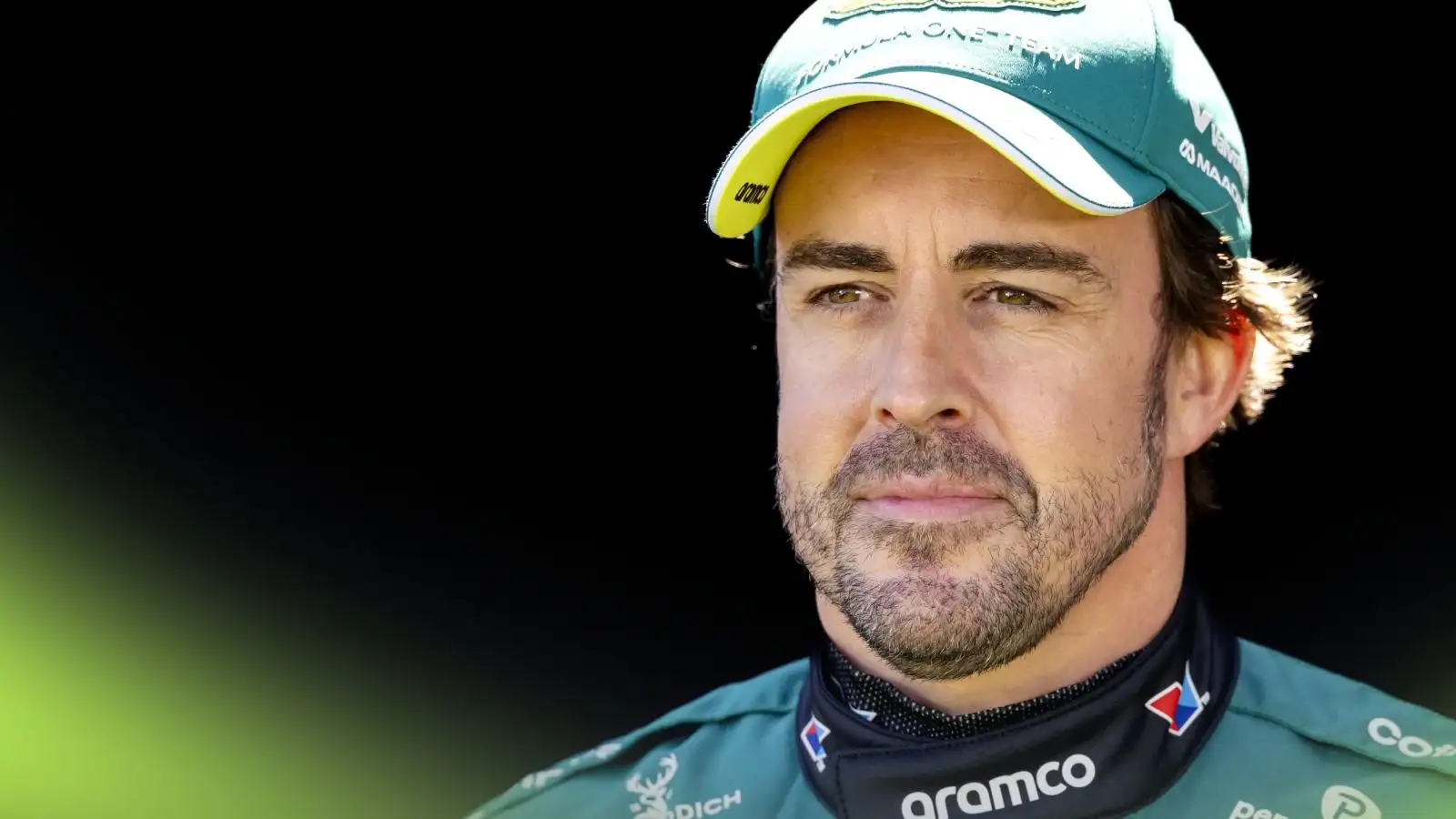
Aston Martin's F1 2026 Dream Shattered: Honda Power Unit Vibrations Trigger Crisis
The roar of Formula 1 engines typically signals the start of a thrilling new season, but for Aston Martin, the dawn of the 2026 F1 era has been anything but triumphant. What was once hailed as a promising partnership with Honda for their power units has rapidly devolved into a catastrophic scenario, with severe vibrations crippling their AMR26 challenger and casting a long shadow over their aspirations – particularly those of veteran driver Fernando Alonso. The Australian Grand Prix, meant to be a showcase of new regulations and renewed competitiveness, instead exposed a deep-seated crisis that threatens to derail their entire season, and potentially, the future of key personnel.
The Crippling Vibrations: A Season-Ending Threat
The core of Aston Martin's woes lies squarely with the new Honda power unit. Team Principal Adrian Newey, a figure synonymous with F1 success, revealed a shocking truth: both Fernando Alonso, 44, and teammate Lance Stroll, 27, are unable to complete sustained running due to intense vibrations. These aren't minor inconveniences; they are so severe they inflict significant pain in the drivers' hands, raising serious concerns about permanent nerve damage. Alonso is reportedly limited to just 25 consecutive laps before the risk becomes too great, while Stroll's threshold is an even more alarming 15 laps.
This physical toll on the drivers is a direct consequence of the Honda unit's design or integration, leading to immediate performance and reliability issues. The vibrations are not merely causing discomfort; they're triggering repeated battery failures, an Achilles' heel in modern F1 power units. So dire is the situation that Aston Martin has reportedly run out of spare parts in Australia, a staggering admission so early in the season. This stark reality means the team's ability to even finish the 58-lap Melbourne race on Sunday is in serious doubt, a crushing blow for any outfit, let alone one with championship ambitions. Fernando Alonso's absence from the first practice session (FP1) at Albert Park due to a "suspected power unit issue" served as a stark, visual confirmation of the team's predicament, with the Spaniard seen in casual team gear, rather than his race overalls, seemingly well aware of his impending withdrawal. This inability to log crucial mileage prevents any meaningful data collection, setup optimization, or even basic driver acclimatization to the new regulations, putting them at an immediate and significant disadvantage.
Beyond the Engine: Chassis Woes and Development Delays
While the Honda power unit is the immediate culprit for the debilitating vibrations, Newey's candid admissions paint a picture of broader systemic issues within the Aston Martin camp. The problems with the AMR26 extend beyond the engine bay, suggesting a fundamental lack of synergy or development foresight. A crucial piece of the puzzle revealed by Newey is that the team started its wind tunnel programme four months late. In the hyper-competitive world of Formula 1, where gains are measured in milliseconds, such a significant delay is akin to starting a marathon several miles behind the pack.
This late start on the chassis side has undeniably contributed to the current situation, where the car is not only suffering from power unit integration issues but is also several seconds off the pace when it does manage to get on track. The restricted running due to power unit problems further exacerbates the chassis's underdevelopment; with limited track time, the team cannot gather the necessary data to understand and improve the car's aerodynamic and mechanical performance. This creates a vicious cycle: an unreliable engine prevents chassis development, and an underdeveloped chassis struggles to cope with the engine's inherent flaws. The hope that Aston Martin could present a truly competitive package in 2026, especially under the new engine and chassis regulations, now seems a distant memory, replaced by a grim struggle for basic competency.
Fernando Alonso: A Champion's Mental Battle and Future
The human element at the heart of this crisis is perhaps the most poignant. Fernando Alonso, a two-time world champion renowned for his unwavering determination and relentless pursuit of success, finds himself in what Newey describes as a "hard mental place." At 44, and with his contract expiring at the end of the season, Alonso's dream of a third Formula 1 title, which he has been chasing since his back-to-back victories in 2005 and 2006, appears to be rapidly slipping away.
Newey, a long-time admirer, eloquently praises Alonso: "He's one of the true greats... His ability, his talent, his all-around capability, he should have won far more than the two championships he has to his name." Despite the adversity, Alonso's physical prowess remains undimmed; his eyesight, reactions, and sheer speed are still top-tier. Indeed, his fierce competitive spirit means he is always striving to *gain time* (alonso ganho tempo) on his rivals, whether through ingenious strategy, aggressive overtakes, or meticulous setup work. However, even for a driver of his calibre, the constant pain and the knowledge that his car is inherently limited create an immense psychological burden. The frustration of being sidelined or unable to push the car to its limits, due to factors beyond his control, must be immense.
The precarious situation raises critical questions about Alonso's future. Will he choose to continue in F1 with a team facing such fundamental challenges, or will this disastrous start push him towards retirement, or perhaps a move to another series? His entire career has been marked by a relentless drive to win, and being stuck in a car that can barely complete a race is undoubtedly a severe test of his famous mental fortitude. For deeper insights into his struggles, read
Alonso's F1 2026 Agony: Aston Martin Car Problems & Nerve Damage Fears.
The Broader F1 2026 Landscape: Early Season Challenges
While Aston Martin's plight is uniquely severe, the first practice session of the 2026 Australian Grand Prix underscored the inherent challenges of launching a new era of F1 regulations. The session itself was plagued by various technical glitches across multiple teams, hinting at the teething problems common with significant rule changes. British rookie Arvid Lindblad stopped almost immediately after leaving the pit-exit, though he eventually managed to get going. McLaren's Oscar Piastri complained of "no power," an issue swiftly rectified. Even reigning world champion Lando Norris was sidelined with a gearbox issue after just seven laps, prematurely ending his FP1.
These incidents highlight that F1 2026 is a complex beast, demanding immense technical prowess from every team. However, Aston Martin's issues stand out not just in their severity but in their fundamental impact on driver safety and basic race completion. Other teams face setbacks, but Aston Martin is grappling with a potential season-long handicap that could see them struggling to even compete meaningfully. This context only further emphasizes the depth of the hole Aston Martin finds itself in. For more on the team's overall struggles, check out
Aston Martin's Disastrous F1 2026 Start: Newey on Alonso's Mental State.
What's Next for Aston Martin and the Future of F1 Power Units?
The road ahead for Aston Martin is undoubtedly steep and fraught with challenges. Addressing the fundamental issue of excessive power unit vibrations will require an intense collaborative effort between the team and Honda. This isn't a quick fix; it likely involves significant redesigns, re-engineering, and extensive testing, all while under immense pressure during an active racing season. The lack of spare parts suggests production and supply chain issues that need immediate resolution.
From a driver well-being perspective, the potential for permanent nerve damage is a grave concern that F1's governing body, the FIA, might need to monitor closely. No driver should be forced to risk long-term health for sport. Strategically, Aston Martin faces tough decisions:
- Engineering Focus: Prioritizing the vibration issue while simultaneously trying to develop the underdeveloped chassis is a monumental task.
- Driver Management: Keeping both Alonso and Stroll motivated and healthy will be critical, especially with Alonso's contract situation.
- Reputational Impact: A prolonged period at the back of the grid could impact sponsor relationships and their ability to attract top talent in the future.
- Honda Partnership: The early signs of this partnership are deeply troubling. Repairing this technical and relational damage will be paramount.
The broader implications for F1's new power unit regulations are also worth considering. While early teething problems are expected, the severity of Aston Martin's issues might prompt scrutiny into the robustness and safety margins required for these highly advanced units.
In conclusion, the 2026 F1 season has begun as a nightmare for Aston Martin. The crippling vibrations from the Honda power unit, compounded by an underdeveloped chassis and critical supply shortages, have not only dashed their immediate hopes but also placed a legendary driver like Fernando Alonso in a profoundly difficult position. The coming weeks and months will be a true test of their resilience, engineering prowess, and capacity to salvage a season that, by all early indications, seems destined for disappointment.